

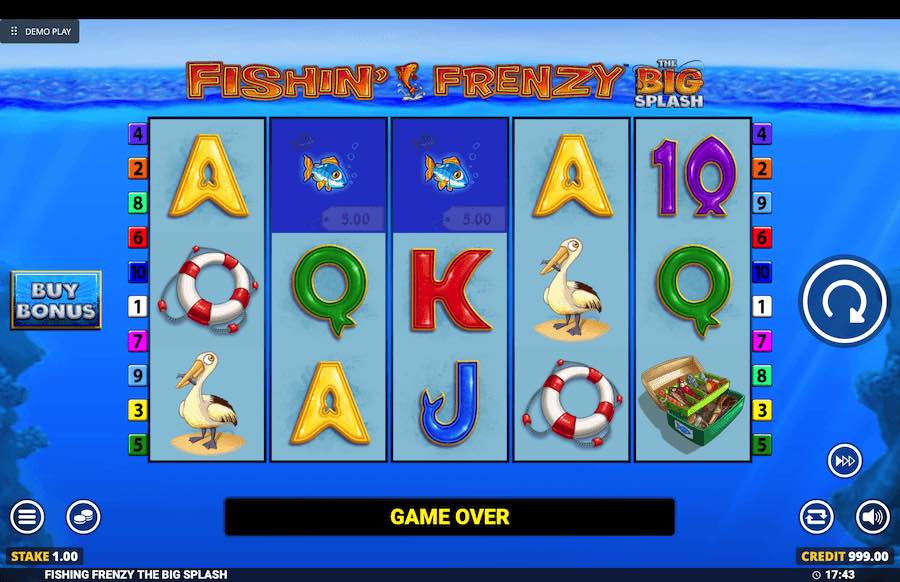
Look past the colorful graphics and catchy sounds of a slot like Fishin Frenzy, and you’ll find a machine of a different sort. This article examines the technical framework that runs this digital pastime. We’ll move past the spinning reels to the client-server model, the random number generator, how sights and sounds reach your screen, and the network chatter that keeps everything running. The goal is to give a clear picture of the design choices that enable a modern video slot function reliably and fairly, turning lines of code into the familiar anticipation of a big catch.
Game Mechanics and Status Management
After the RNG supplies its number, the game logic engine steps in. This system processes that number, applies the game’s rules, and figures out the result. It checks the paytable for wins, activates special features like the Fisherman’s Free Spins round, and tracks the game’s state. That means overseeing your current bet, any accumulated wins during a bonus, and active multipliers. A critical task is keeping the server and your client perfectly in sync. The server is the single source of truth. The client’s role is to faithfully represent the game state it receives. This stops situations where your screen shows one thing while the server records another, confirming the win you see is exactly the win credited to your account. The state system must also be tough enough to recover sessions if your connection falters.
Future-Proofing and Evolving Architecture
Technology doesn’t stand still, and neither does a slot’s architecture. Future-proofing means building systems that can adapt. This includes adopting containerization tools like Docker and Kubernetes, which package the game server and its dependencies into portable, easily managed units. A shift toward microservices—breaking a monolithic game backend into smaller, independent services for the RNG, game logic, and player state—makes updates and maintenance easier. The architecture must also be ready to adopt new standards, like WebGPU for richer browser-based graphics, or low-latency streaming protocols for a potential move to cloud-gaming models. The objective is a resilient system that can evolve without breaking. This also means designing for new ways to play, such as virtual reality or skill-based bonus rounds, ensuring the core platform can support these additions.
Horizontal scaling and Traffic Distribution
A hit game must operate without issues for tens, hundreds, or tens of thousands of people playing at once. That requires a scalable design. Instead of one server, the game is hosted on a cluster in a cloud or data center. A load balancer acts as a traffic director, spreading incoming player connections evenly across the available servers. If one server is overwhelmed or fails, the load balancer quietly redirects its users to functioning ones, often without any visible downtime. The system can also grow outward. During peak hours, automated processes can provision extra server instances to cope with the load, then reduce when traffic declines. This adaptability maintains stable performance no matter how many people log on. The design promotes statelessness where possible, allowing any server to handle any player’s request, which makes scaling efficient.
Backend System Integration

The slot does not operate in isolation. It plugs into a wider network of backend services. A major integration is with the wallet or cashier service, which manages your deposits, withdrawals, and current balance. The game client communicates with this service to submit your stake and add any winnings. Another vital link is to the player account system, which monitors your gameplay history, bonus eligibility, and loyalty points. The game server also feeds a steady stream of data into reporting and analytics platforms. Operators utilize this to monitor game health, measure performance metrics, and gain insight into player behavior. All these connections occur via secure Application Programming Interfaces (APIs). These APIs utilize strict schemas and authentication tokens to guarantee only authorized systems can talk to each other, maintaining overall security.
- Payment Service: Controls all money movement. The game transmits API calls to “debit bet” and “credit win,” considering this external system as the final ledger.
- Player Account System: The central database for player profiles. It implements age and location checks, and manages which bonus campaigns a player is eligible for.
- Game Control Server (GCS): A distinct system that adjusts game settings, RTP versions, and available bet levels, pushing updates out to the game server cluster.
- Data Reporting: Takes in real-time event data—every spin, win, and feature trigger—for business intelligence, fraud detection, and reports for regulators.
- Bonus & Campaign Engine: Handles promotional logic, awarding free spins or bonuses based on gameplay triggers sent from the game server.
Safety Measures and Information Integrity
A slot’s architecture needs to be a bastion. Several security layers are baked into the layout. Every unit of content moving between the player and the server is encrypted end-to-end with standards like TLS, the same used for online banking. On the server side, firewalls and intrusion detection systems guard against illegal entry. The payment core that handles bets and returns is often isolated in its own secure module. To stop cheating, the client software is typically scrambled and runs verification checks on itself. If it detects tampering, it will simply stop. These actions secure the operator’s system and the player’s money and details. Frequent penetration tests and security audits hunt for weaknesses before they can be used.

Communication Protocols and Latency Considerations
The communication between your equipment and the game server uses specific network protocols chosen for speed and reliability. HTTPS protects the data, but for real-time updates, many games use WebSockets. This maintains a persistent, two-way line open, which is more effective than constantly opening and closing new HTTP connections. Latency—the delay between your action and the game’s reaction—is a prime consideration. Engineers strive to minimize it by refining server code for speed, placing servers near their player bases, and using efficient data formats that keep messages smaller. A low-latency connection ensures the digital slot feeling as responsive as a physical one. Advanced setups also feature buffering and redundant paths to smooth over network jitter and packet loss.
RNG: The Heart of Equity
The foundation of any slot is its Number Randomizer, or RNG https://fishinfrenzy.ca. This isn’t just a line of code; it’s a advanced algorithm that generates thousands of numbers every second, completely independent of what any player does. The instant your spin request reaches the game server, it grabs the RNG’s output at that precise microsecond. That number gets aligned against a strict mathematical model—the game’s volatility and its published Return to Player (RTP) percentage—to decide which symbols appear on the reels. The process is determined from the server’s view, but completely unpredictable from yours. Independent testing agencies check this RNG constantly, running millions of simulated spins to confirm its randomness and the absence of patterns. This certification is the bedrock of trust for the game.
Surveillance, Data Analysis, and Operational Intelligence
Managing a live game needs clear insight into its operations. Comprehensive monitoring tracks server health: CPU load, memory use, and network activity. Application Performance Monitoring tools track a single spin request as it moves through all the microservices, pinpointing any delays. On the business side, every game event is logged and sent to data warehouses. Analysts sift through this information to assess player engagement, match the actual hit rate of bonus features against theoretical models, and identify popular bet levels. This data-driven feedback affects game tweaks, marketing efforts, and even the design of future titles. Real-time dashboards alert engineers to odd patterns, enabling them resolve problems before players notice anything wrong.
Audiovisual Asset Delivery and Optimization
The delightful underwater theme is realized via a stream of visuals and audio. High-resolution graphics for symbols and backgrounds, plus all the animations and sound effects, add up to a lot of data. Modern design uses several tricks to keep this manageable. Resources are heavily compressed with formats such as WebP for images, reducing file sizes without a noticeable loss in quality. They load progressively, so the essential parts appear first and the rest fills in. A Content Delivery Network, or CDN, stores the game’s art and sounds on servers spread around the globe. This allows a player in Toronto to download files from a local server rather than a far-off data center, decreasing wait times and eliminating hiccups. Developers also package assets and utilize sprite sheets to lower the amount of distinct network requests, a vital performance optimization.
- File Compression & Formatting: Contemporary codecs such as WebP for images and Opus for audio reduce file sizes while maintaining excellent quality.
- Progressive Loading: Core game features load first to let you play, while higher-resolution textures and extra animations load in the background afterward.
- Content Delivery Network Strategy: Assets sit on a globally distributed network of edge servers, shortening the physical distance data travels to a player’s device.
- Caching Policies: Intelligent browser and local caching saves resources so they don’t require a new download each time you return to the game.
The Client-Server Framework: Foundation of Digital Gaming
Fishin Frenzy, like any online slot, rests on a client-server separation. The client exists on your phone, tablet, or computer. Its role is to present the underwater scene, generate the bubbling sounds, and record your tap to spin. The real authority, though, lies on a remote server. This division serves for security. When you hit spin, your device transmits a request, but the server dictates what happens next. All results are created in that secured environment, which blocks tampering and guarantees fair play. Your client is usually a lightweight collection of HTML5 and JavaScript, constructed to run anywhere. The server is a more substantial, fortified application stack where the core game logic operates.
Frequently Asked Questions
In what way does the game verify that each spin is truly random and fair?
A verified Pseudo-Random Number Generator (PRNG) functions on a secure server. This algorithm produces a long, unforeseeable sequence of numbers. The precise microsecond you press spin determines which number is used to compute where the reels stop. Independent testing labs like eCOGRA or iTech Labs review this RNG and the game’s math model routinely. They verify its randomness and verify it matches the reported Return to Player (RTP) percentage, delivering provably fair outcomes.
How come do I sometimes see a „loading“ screen or a delay before the game starts?
That initial load is generally your device retrieving the game’s graphics and sounds from a Content Delivery Network. How long it takes relies on your internet speed and how close you are to a CDN node. Developers optimize assets and load the most important elements first to shorten the wait, but a brief pause is typical for a detailed game. Thanks to local caching, subsequent visits load much faster.
What takes place if my internet connection disconnects in the middle of a spin?
This system is designed for this. The spin’s outcome is determined on the server at the moment you initiate it. If your connection drops, your screen might freeze, but the result is already stored on the game server. When you reconnect, your client syncs back up with the server and shows the correct outcome. Any win from that spin will have already been applied to your account balance. You cannot lose a legitimate win because of a disconnect.
Is my personal and financial data safe when playing this slot online?
Reliable platforms use bank-grade security across the board. All data moving between your device and their servers is encrypted with TLS, the same technology that secures online banking. Financial transactions go through secure payment gateways, and sensitive data isn’t stored on the game servers themselves. The system is protected by multiple layers, including firewalls and intrusion prevention, and must comply with strict data protection regulations.
Can the game’s functions, like the Free Spins bonus, be manipulated?
No. The trigger conditions for bonus features are specified in the game’s mathematical model and are controlled by the same certified RNG as the base game. The chance of entering the bonus round is fixed and has been verified by independent testers. The architecture guarantees that these feature triggers are random events, calculated on the server, making them impossible to predict or influence from the outside.